Part Number:
Quantity:
Price per Unit (in USD):
Total Amt:
Log in to myMicrochip to access tools and benefits. Sign up in just one minute.
Maximize Your Experience: Reap the Personalized Advantages by Completing Your Profile to Its Fullest. Update Here
Stay in the loop with the latest from Microchip. Update your profile while you are at it. Update Here
Complete your profile to access more resources. Update Here

true
dsPIC33CK Single-Core Digital Signal Controllers (DSCs)
Real-Time Performance for Motor Control, Digital Power, Advanced Sensing and Control, Touch, Security, Safety-Critical and High-Performance Embedded Applications
New Product
dsPIC33CK MC0 Value Line DSCs
The cost-optimized dsPIC33CK Value Line Digital Signal Controllers (DSCs) deliver essential, real‑time performance to give you fast and accurate control-loop execution.
Key Applications

General-Purpose, High-Performance and Robust Designs
Our dsPIC33CK DSCs are well suited for real-time control, high-performance designs, robust connectivity and advanced sensor interfacing applications.
- Simplicity of a microcontroller (MCU) and 100 MHz core to handle real-time operations
- Rich analog integration for sensing, measurement and control applications
- Dual-panel Flash for bootloading
- Scalable connectivity with CAN FD, LIN, SENT and 10BASE-T1S Single-Pair Ethernet (SPE)
- AUTOSAR® ready and AEC Q100 Grade 0 qualified

Motor Control
dsPIC33CK DSCs are suitable for applications that require variable speed with constant torque and Field-Oriented Control (FOC) for greater efficiency.
- Optimized motor control peripherals that lower Bill of Material (BoM) cost
- Low-noise operation supporting ≥ 20 kHz Pulse-Width Modulation (PWM) switching frequencies and sinusoidal control
- Small form factor for space-constrained designs
- Comprehensive development tools for BLDC, PMSM, ACIM and stepper motors running sensored or sensorless control

Digital Power Conversion
dsPIC33CK DSCs feature a Digital Signal Processor (DSP) for high-speed control loop execution in demanding high-frequency power conversion designs.
- High-resolution 250 pS PWMs to control various power topologies
- Tightly coupled CPU, PWMs and Analog-to-Digital Converters (ADCs) to reduce latency and improve response
- Maximum analog integration including high-speed ADCs, fast comparators, op amps and Digital-to-Analog Converters (DACs)
- Live update of firmware for high-availability systems

Functional Safety
Our functional safety ready/compliant dsPIC33CK DSCs can be used in safety-critical applications targeting ISO 26262 ASIL B, IEC 61508 SIL 2 and IEC 60730 Class B standards.
- Hardware safety features
- Failure Modes, Effects and Diagnostic Analysis (FMEDA) report
- Safety manual
- Functional safety diagnostic libraries
- Functional safety development ecosystem

Embedded Security
Our dsPIC33CK DSCs, combined with our ATECC608 CryptoAuthentication™ and TrustAnchor100 (TA100) CryptoAutomotive™ security ICs, allow you to implement robust security in your designs.
dsPIC33CK DSCs offer:
- Secure immutable boot
- Node authentication
- Secure firmware upgrade
- Secure provisioning
- Message authentication and encryption
- Secure key storage and hardware key isolation

Robust Touch Sensing and Control
Core Independent Capacitive Touch DSCs offer leading-edge touch sensing performance with robustness.
- Self- and mutual- touch sensing
- Boost mode to increase the Signal-Noise Ratio (SNR) for mutual sensing with fast touch response
- Driven Shield+ for water- and moisture-tolerant touch sensing
- MCC Melody provided touch libraries with active noise avoidance
- Metal-over-cap technology to sense through stainless steel, aluminum, and other materials
Documentation
Tools and Software
- Demo & Evaluation Boards
- Development Environment
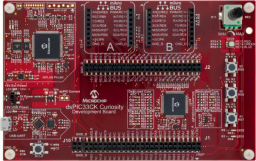
The dsPIC33CK Curiosity Development Board (DM330030) is a cost-effective development and demonstration platform for the dsPIC33CK family of single-core high performance digital signal controllers.
Designed to take full advantage of Microchip’s MPLAB® X IDE, the board includes an integrated programmer/debugger and requires no additional hardware, making it a perfect starting point to explore the dsPIC33CK family.
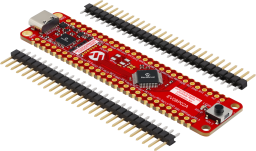
This Curiosity Nano evaluation kit provides an easy access to all features of the dsPIC33CK256MC005 DSC for rapid prototyping of your custom design.
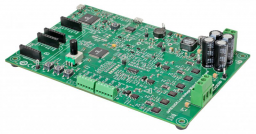
The dsPIC33CK Voltage Motor Control (LVMC) Development Board is a cost-effective rapid development platform for Brushless DC (BLDC), Permanent Magnet Synchronous Motor (PMSM) and Internal Permanent Magnet (IPM) motor control applications. The LVMC development board is ideal to explore and prototype motor control applications that operate from 12 to 48 Volts and up to 10 Amps of continuous current. The board can also support higher current, up to 20A with an optional fan or heatsink.
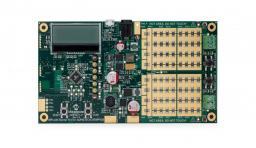
dsPIC33C Digital Power Starter Kit introduces and demonstrate the capabilities and features of Microchip's SMPS families of devices. It features on-board dsPIC33CK256MP505 DSC, SMPS power stages, loads, LCD display, USB/UART bridge and programmer/debugger, which eliminates the need for any additional hardware.
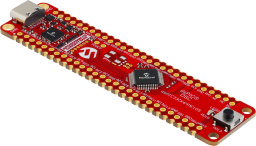
The dsPIC33CK64MC105 Curiosity Nano Evaluation Kit is a cost-effective hardware platform to evaluate the dsPIC33CK family of high-performance Digital Signal Controllers (DSCs). The board features the 100 MHz dsPIC33CK64MC105 DSC, which offers 64KB of ECC Flash, 8KB of RAM, a 12-bit/3.5 Msps ADC with 15 channels, 3 op amps, 1 analog comparator, a 12-bit DAC, 4x2 high-speed PWMs with 2 ns resolution and several Core Independent Peripherals (CIPs). The dsPIC33CK ‘MC1’ family is ideal for the design of automotive, motor control, sensor interfacing and control, high-performance, functional safety, and robust applications.

MPLAB X IDE is a highly configurable software platform that provides powerful, free tools for developing, debugging and qualifying embedded designs that use microcontrollers and digital signal controllers.
The MPLAB XC-DSC C/C++ Compiler is a full-featured, optimizing compiler that translates standard ANSI C programs into Digital Signal Controller (DSC) device assembly language sources. This compiler also supports many command-line options and language extensions that allow full access to the DSC device hardware capabilities and gives users fine control of the compiler code generator.
MPLAB Code Configurator supports 8-bit, 16-bit and 32-bit PIC® microcontrollers. MCC is incorporated into both the downloadable MPLAB X Integrated Development Environment (IDE) and the cloud-based MPLAB Xpress IDE.

MPLAB Tools for VS Code are a set of extensions that integrate the MPLAB development ecosystem with VS Code, offering a seamless and efficient environment for developing designs based on Microchip devices.
Video
dsPIC33CK64MC105 Curiosity Nano Evaluation Kit Overview
The dsPIC33CK64MC105 Curiosity Nano Evaluation Kit is a cost-effective hardware platform to evaluate the dsPIC33CK family of high-performance Digital Signal Controllers (DSCs). Find out how easy it is to get started with the dsPIC33CK Curiosity Evaluation Kit and explore our dsPIC33 DSCs for your next design.
Learning

Designing and Implementing a CAN FD Network
This free class covers CAN FD protocol and physical layer by guiding you through a CAN FD network design and implementation based on an example application.
dsPIC33C DSC Peripheral Deep Dive
This class presents deep-dive information on the architecture, set up, demonstration and pitfalls of the most common dsPIC33C peripherals.

DSP Features of the Microchip dsPIC® DSC
This class covers the DSP specific features of the dsPIC Digital Signal Controller architecture in detail.